


Our corporate social responsibility (CSR)
NaTran’s CSR policy is the cornerstone of the whole company’s commitment to sustainable development goals, working closely with its stakeholders. The CSR policy frames the implementation of the company’s core purpose and fuels its CAP24 transformation project. It is the visible outcome of the way that NaTran factors all of its environmental and societal impacts into its strategy and activities.
La politique RSE de NaTran se déploie à travers 4 axes structurants déclinés en 13 engagements, directement issus de notre raison d’être. Ces engagements sont pensés comme des leviers de transformation durable de nos activités, de nos infrastructures et de nos relations avec l’ensemble de nos parties prenantes.
NaTran has set some ambitious carbon targets in response to the climate challenge. These include contributing to France’s carbon neutrality by 2050, and keeping the increase in global average temperatures to “well below 2°C”, in line with the Paris Climate Agreement. To hit these targets, NaTran has set out three commitments :
- Reduce CO2eq emissions from its carbon footprint by 20% in 2024 and by 40% in 2030 (compared to 2019). Efforts are focused on industrial emissions, but also on service industry activities (purchasing, eco-design, etc.).
- Decarbonise the gas chain by promoting and supporting the development of renewable gases and their uses: working together with the production sectors, the aim is to connect 12 TWh of renewable gas to the French gas networks in 2024 and 60 TWh in 2030.
- Offer its customers long-term access to competitive energy: the target is to maintain an average cost of access to the gas transmission network of 48 euro cents per KWh/day/year of subscribed capacity by 2024. Furthermore, NaTran undertakes to reduce the cost of renewable gas injection facilities in its networks by 20%, and to increase the share of investments dedicated to the energy transition and the carbon trajectory to 20% in 2024.
Employees and stakeholders are the keystones both of NaTran’s future and its ability to meet the challenges posed by the ecological and energy transition. NaTran therefore undertakes to:
Promote skills development, diversity and quality of life at work (QLW): targets for 2024 are for a 25.5% female workforce, to increase the employee engagement rate by 7 points, and to increase the QLW index by 4 points (compared to 2018).
- Support its customers in their energy needs and the decarbonisation of their uses: the company will seek to develop its infrastructures, facilitate access to the market, enrich its offering and offer new services by consulting stakeholders and listening to their needs. The current aim is to provide our customers with indisputable proof of the utility of renewable gases, hydrogen and CCUS. With this in mind, three key indicators have been set for 2024: maintaining a 90% customer satisfaction level; developing 20 customer partnerships centred on decarbonisation; and connecting 16 (bio)NGV stations to the network.
- Co-construct sustainable energy solutions with the regions: by 2024, this cooperation must take the form of three new demonstrators for the novel renewable gas sectors (pyrogasification, hydrothermal gasification) and hydrogen transmission.
- Introduce a responsible purchasing policy based on long-term supplier relationships: in 2021, the third edition of the Supplier Survey confirmed a good level of satisfaction (77%). Since 2020, NaTran has also set itself the target of making €1.5 million in purchases from disabled-friendly sectors (TPA), i.e. 25% more than the regulatory requirement.
NaTran’s CSR commitments are designed in full compliance with the demands of its public service missions:
- Ensure the safety of people and property: NaTran works tirelessly to keep the accident frequency rate below 1.9.
- Guarantee the continuity and quality of supply: under the ten-year plan, 40% of NaTran pipelines must be inspected and treated in 2024.
- Comply with ethical and regulatory standards: NaTran aims to train 100% of its employees in the application of its Ethical Charter by 2024.
- Protect the environment: NaTran acts to protect the environment and biodiversity. It has defined a set of actions linked to its land holdings and waste management aimed at preserving biodiversity.
Parce que la transition repose avant tout sur les femmes et les hommes qui la portent, nous plaçons l’engagement humain au cœur de notre démarche RSE. Cet axe vise à créer un environnement de travail sûr, inclusif et propice au développement des compétences.
- D1 – Promouvoir un environnement de travail sûr et sain pour nos salariés et prestataires
- D2 – Développer l’employabilité et l’engagement de nos collaborateurs
- D3 – Favoriser l’inclusion, l’égalité et la mixité
A 3-pronged CSR policy
NaTran’s CSR policy is based on three priorities and ten priority commitments. Each of these takes shape around quantitative targets set for 2024 and 2030.
Rapport intégré de NaTran 2024
For 15 years, NaTran has been striving to minimise its GHG emissions (mainly methane and CO2) throughout the gas transmission value chain. Since 2022, the company’s actions have reduced its industrial GHG emissions by more than 19% compared to 2019. NaTran is targeting a 40% reduction in 2030 (compared to 2019), in line with the Paris Agreements.
- Reducing methane emissions: Alongside other major stakeholders committed to reducing methane emissions, NaTran is a member of the Methane Guiding Principles and l’OGMP 2.0.
Its R&D has led to various innovations (Gas booster, Quick Booster Access, Detox Ton Réseau, Blue-flame Burning of 100% of methane). As a result, over the past five years, 90% of the methane that was once discharged into the atmosphere during works has been recovered. In 2022, this rate rose to 97%. - Reducing CO2 emissions : the energy consumption required to compress gas for transmission is the main source of NaTran’s CO2 emissions. NaTran is constantly improving its infrastructure. It identifies its most energy-efficient operating plans on a daily basis to reduce these emissions. The company is developing an Energy Management System that is subject to international ISO 50.001 certification. Efforts are also underway to minimise the carbon impacts caused during works, and to work with our Suppliers to decarbonise our purchases.
A new challenge is on the horizon for NaTran, its partners and national and international bodies: to define and harmonise transparent, fair methods to assess the quantities of GHG emissions avoided upstream and downstream of the “gas transmission” link within the overall carbon footprint. To rise to this challenge, and with the support of the consulting firm Carbone 4, NaTran has undertaken a mission as part of the Net Zero Initiative – a project supported by ADEME, the Ministry of the Ecological Transition, and twenty-one other companies.
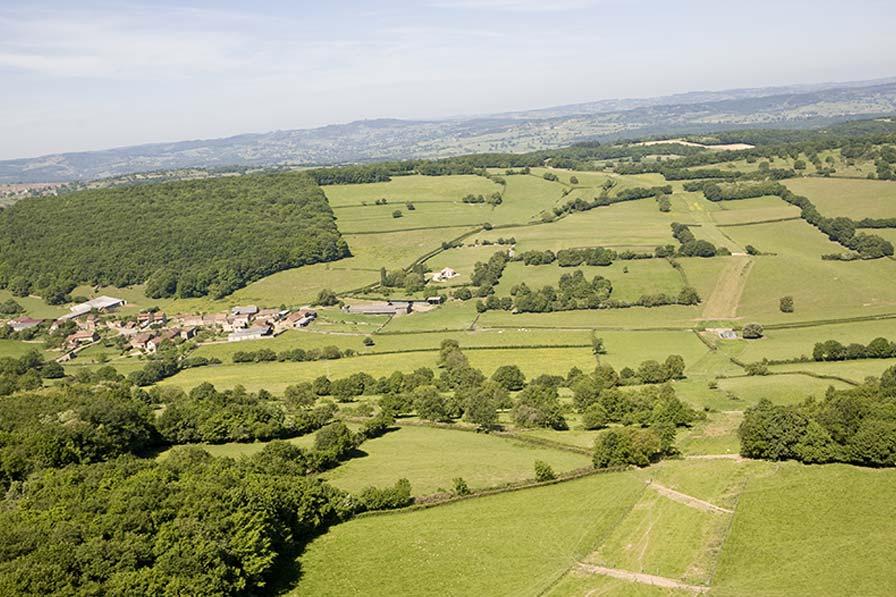
With 32,000 km of easement strips and nearly 10,000 surface facilities spread over 5,000 sites, biodiversity and land use are major environmental issues for NaTran. The company seeks to reconcile the development and maintenance of its facilities with the preservation and maintenance of ecosystems. This is a real challenge, since 8,000 km of pipelines are located in protected natural areas. In 2023, NaTran, working together with CDC Biodiversité (a subsidiary of the Caisse des Dépôts, a French public sector financial institution), committed to its first Global Biodiversity Score (GBS) biodiversity footprint measurement.
- Avoid, reduce and offset impacts: NaTran primarily aims to avoid environmental impacts in connection with its projects and works. For non-avoidable impacts, the company seeks out reduction and offsetting solutions based on the Avoid-Reduce-Offset (ARO) model. The company is supported by monitoring contracts with offsetting operators and partners (Natural Space Conservatories, environmental non-profit organisations, Regional Natural Parks, etc.)
- Work towards “zero synthetic phytosanitary products”: Maintain easement strips in a logical, sustainable way: NaTran uses logical, sustainable actions to maintain its easement strips (late mowing, mowing with grass removal, mowing at height, etc.). These practices are defined in consultation with specialised partners. They minimise impacts on fauna and flora, and present opportunities to create green biodiversity corridors.
- Work towards “zero synthetic phytosanitary products”: 100% of the major NaTran sites are maintained without synthetic phytosanitary products. In total, at the end of 2022, 70% of the 5,000 company sites applied the so-called “zero phyto” policy. The rollout is ongoing, in conjunction with its partners. Working alongside local partners, NaTran is gradually implementing ecological management plans on major sites to promote the return of biodiversity.
- Support and education: NaTran has signed a partnership agreement with the French Federation of Regional Natural Parks and 13 Regional Natural Parks. The company is also a member of the Linear Infrastructure and Biodiversity Club (CILB). NaTran uses this consortium to expand knowledge in the area of ecology and infrastructure and to co-finance research work. NaTran has also renewed its commitment to being a “Enterprise committed to Nature – Act4Nature France ». The initiative aims to mobilise companies about their direct and indirect impacts, their dependencies, and possible actions they can take to support nature.
NaTran promotes a culture of energy savings and developing a circular economy to support both the regions and public and private stakeholders.
This entails a range of challenges: on the one hand, moving towards the energy efficient and responsible consumption of natural resources and primary raw materials; on the other, preventing the production of waste or, in order of priority, reusing, recycling or recovering this waste.
- Develop renewable and low-carbon gases: NaTran is constantly innovating to develop its practices and contribute to the deployment of renewable and low-carbon energy solutions. Its support for sustainable local energy solutions promotes energy efficiency and the reduced use of fossil gases. The interlinking nature of its transmission network promotes solidarity between the regions. Its anaerobic digestion, pyrogasification and hydrothermal gasification facilities also offer local alternatives for recovering generated organic and industrial waste as part of a circular economy. The target for 2030 is to have an annual renewable gas production capacity of 60 TWh per year connected to the networks.
- Manage, avoid, reduce and recover NaTran’s waste: NaTran pays particular attention how the waste generated by its activities is managed. Waste registers are used at all its sites and worksites to optimise their management from an environmental performance standpoint. These measures include tertiary sorting (paper, plastics, cans, etc.), industrial sorting (inert waste and hazardous waste), and worksite sorting (wood, scrap metal, rubble, soil). Many actions are underway to reduce and recover waste, including: on-site crushing of rubble and pebbles, prioritisation of recycling channels, internal communication actions, collection of textiles and discarded personal electrical and electronic equipment, etc. Waste recovery has improved significantly from 74% in 2017 to 99% in 2022.
Dans le cadre de la directive CSRD, NaTran renforce ses obligations de transparence et de reporting. La production de l’information extra-financière est supervisée par le Directeur RSE. En 2026, nous publions un rapport de durabilité au sens de la CSRD, offrant une vision globale de sa performance, de sa stratégie et de sa création de valeur.
Ce rapport, validé par le Conseil d’Administration de NaTran, sera rendu public sur le site internet de l’entreprise pour une durée de cinq ans, afin de garantir une information accessible, fiable et utile à l’ensemble des parties prenantes.
Comment NaTran coopère avec ses parties prenantes et pilote sa politique RSE ?
Nous avons construit notre démarche RSE comme un projet collectif, fondé sur la coopération, la coresponsabilité et un pilotage exigeant. Elle s’appuie à la fois sur le dialogue avec nos parties prenantes et sur une gouvernance interne intégrée, pour garantir la cohérence entre engagements, actions et résultats.
Notre démarche RSE est le fruit d’une co-construction avec plus de 50 parties prenantes, internes et externes. Ensemble, nous avons priorisé des engagements clairs, assortis d’indicateurs permettant d’en suivre la mise en œuvre et d’en rendre compte dans la durée. Cette approche renforce la pertinence de nos choix et leur ancrage dans les attentes de la société.
Nous nous appuyons sur un Conseil des parties prenantes, composé de représentants des clients, des territoires et collectivités, du monde agricole, des fournisseurs et des associations environnementales. Cette instance apporte un regard externe sur nos activités et nos projets, et contribue à une meilleure compréhension des enjeux sociétaux et environnementaux auxquels nous sommes confrontés.
Depuis 2024, le Conseil est doté d’une triple mission :
- contribuer à l’évaluation de la performance globale de l’entreprise et de la mise en œuvre de notre raison d’être,
- participer au questionnement stratégique
- et favoriser des interactions croisées avec le Comité Exécutif et le Conseil d’Administration.
Notre politique RSE repose sur l’engagement de l’ensemble des équipes. Une centaine de collaborateurs « éco-leaders » contribuent à l’acculturation des salariés, et un pilote est identifié pour chacun des engagements pris. Cette mobilisation collective complète les dispositifs existants liés à la sécurité, à l’éthique et aux politiques sociales.
Nous assurons le suivi de notre politique RSE grâce à une organisation claire et responsabilisée.
Chaque engagement est piloté par des responsables identifiés, sous la coordination du Directeur RSE. La mise en œuvre fait l’objet d’un suivi mensuel au sein du COMEX, notamment à travers le tableau de bord de la performance globale.
Chaque direction de NaTran est pleinement impliquée et responsable du déploiement de la politique RSE sur son périmètre, en lien avec ses activités et ses enjeux spécifiques.
Nous avons fait le choix d’une gouvernance et d’un pilotage intégré, associant dimensions financières et extra-financières. Le rapprochement entre la direction RSE et la direction financière traduit notre volonté de considérer la performance dans toutes ses dimensions. Chaque engagement fait l’objet d’un plan d’action, d’indicateurs de suivi audités et d’une publication transparente dans le cadre de la Déclaration de Performance Extra-Financière.
10 CSR Commitments
A/ Act to achieve affordable carbon neutrality
- Reduce our carbon footprint
- Step up the energy transition by developing green gases
- Guarantee access to affordable, sustainable energy
- Grow in a sustainable way

B/ Meet the challenges of the ecological transition with our employees and stakeholders
- Promote the development of skills, diversity and QLW for our employees
- Provide support for our customers with their energy needs and their decarbonisation actions
- Co-construct sustainable energy solutions with regional stakeholders

C/ Ensure that our activities are carried out in a responsible manner
- Oversee the safety of people and infrastructures and ensure the continuity of our operations
- Perform our activities ethically and in compliance with regulations
- Protect the environment (beyond carbon emissions) and biodiversity linked to the impact of our activities

Comment NaTran contribue-t-elle à la lutte contre le changement climatique ?
Nous agissons depuis plus de 15 ans pour réduire les émissions de gaz à effet de serre sur l’ensemble de la chaîne de valeur du transport de gaz. Grâce à des actions continues, NaTran a réduit de plus de 19 % ses émissions industrielles de GES depuis 2022 et vise une réduction de 40 % à l’horizon 2030, en cohérence avec les objectifs de l’Accord de Paris.
Le méthane constitue un enjeu prioritaire. NaTran est engagée aux côtés d’acteurs internationaux à travers les initiatives Methane Guiding Principles et OGMP 2.0. Nous mobilisons des innovations issues de la R&D pour limiter les émissions lors des opérations :
- équipements de récupération,
- optimisation des interventions et solutions industrielles dédiées.
Ces actions ont permis de récupérer jusqu’à 97 % du méthane autrefois émis lors des travaux.
La compression du gaz, nécessaire pour assurer son transport, représente la principale source d’émissions de CO₂ de nos activités. Pour les réduire, nous améliorons en continu nos infrastructures et optimisons nos schémas d’exploitation afin de privilégier les solutions les plus sobres en énergie. NaTran déploie également un Système de Management de l’Énergie certifié ISO 50001 et agit sur la décarbonation de ses travaux et de ses achats, en lien avec ses fournisseurs.
Un nouveau défi s’ouvre : mieux mesurer et valoriser les émissions de GES évitées en amont et en aval du transport de gaz. NaTran s’est engagé dans ce travail méthodologique d’harmonisation des méthodes de calcul aux côtés du cabinet Carbone 4, dans le cadre de la Net Zero Initiative, soutenue par l’ADEME et le ministère de la Transition écologique.
Comment NaTran préserve la biodiversité et les usages des sols ?
Avec plus de 32 000 km de bandes de servitude et près de 10 000 installations réparties sur 5 000 emprises foncières, la préservation de la biodiversité et des sols est un enjeu majeur. Nous concilions le développement et l’entretien de nos infrastructures avec la protection des écosystèmes, y compris dans des zones naturelles sensibles.
Dans nos projets et travaux, nous privilégions l’évitement des impacts environnementaux. Lorsque ceux-ci ne peuvent être évités, nous mettons en œuvre des actions de réduction et, le cas échéant, de compensation, en nous appuyant sur des partenaires spécialisés tels que les Conservatoires d’espaces naturels, les Parcs naturels régionaux ou des opérateurs de compensation.
Nous pratiquons un entretien raisonné des bandes de servitude – fauche tardive, enlèvement des résidus, adaptation des hauteurs de fauche –, afin de limiter les impacts sur la faune et la flore et de favoriser les continuités écologiques. Par ailleurs, 100 % de nos grands sites sont aujourd’hui entretenus sans produits phytosanitaires de synthèse, et cette démarche « zéro phyto » se déploie progressivement sur l’ensemble de nos emprises.
En 2023, NaTran a réalisé sa première évaluation de son empreinte biodiversité avec CDC Biodiversité, en s’appuyant sur le référentiel Global Biodiversity Score (GBS), afin de disposer d’une mesure de référence et piloter sa trajectoire à horizon 2030.L’entreprise est engagée dans de nombreux partenariats et réseaux. Nous travaillons notamment avec les Parcs naturels régionaux (dont le PNR de l’Avesnois), la Fédération des PNR, la LPO, le Cerema, le Club Infrastructures Linéaires et Biodiversité, ainsi que des conservatoires d’espaces naturels et associations environnementales, dans le cadre de plans de gestion écologique concertés et de marchés d’entretien intégrant des pratiques alternatives au « zéro phyto ». Nous participons aussi à l’initiative Act4Nature France, afin de contribuer à la connaissance, à la restauration des milieux et à la sensibilisation.
Comment NaTran inscrit ses activités dans une logique d’économie circulaire ?
NaTran promeut une culture de sobriété et développe l’économie circulaire au service des territoires. Nous agissons à la fois pour réduire la consommation de ressources et prévenir la production, recycler ou valoriser les déchets générés par nos activités.
Le développement des gaz renouvelables et bas-carbone constitue un levier majeur d’économie circulaire.
Méthanisation, pyrogazéification ou gazéification hydrothermale permettent de valoriser des déchets organiques et industriels en ressources énergétiques locales. En soutenant ses solutions énergétiques locales durables, nous favorisons la sobriété énergétique. En s’appuyant sur le maillage de son réseau, NaTran favorise la solidarité entre territoires et vise une capacité de production de 60 TWh de gaz renouvelable raccordé aux réseaux d’ici 2030.
Nous portons une attention particulière à la gestion des déchets sur nos sites et chantiers, à travers le tri à la source, la valorisation des matériaux et des démarches d’éco-conception.
Registres de suivi des déchets, concassage des gravats sur site, recours prioritaire aux filières de recyclage, réemploi d’équipements et amélioration de la traçabilité ont permis de porter le taux de valorisation des déchets à 98 % en 2024, traduisant une gestion toujours plus responsable des ressources.
Dans le cadre de notre politique d’économie circulaire et de gestion responsable des déchets, nous sommes engagés aux côtés de l’association Les P’tits Doudous, qui œuvre pour améliorer l’accueil des enfants opérés à l’hôpital. Depuis 2022, les équipes de l’entreprise collectent et trient les rebus métalliques issus des activités de maintenance et des chantiers afin de les orienter vers des filières de recyclage.
Cette démarche donne une seconde vie à des déchets industriels tout en générant des ressources pour financer les actions solidaires de l’association. Grâce à l’implication des salariés, 926 tonnes de déchets métalliques et 443 kg de câbles ont ainsi été valorisés depuis 2022, représentant environ 1 200 tonnes de CO₂ évitées selon les facteurs de l’ADEME. Ce partenariat, renforcé depuis octobre 2025, illustre la manière dont NaTran conjugue sobriété dans l’usage des ressources, réduction de l’empreinte environnementale et engagement sociétal, en transformant la gestion des déchets en un levier à la fois environnemental et solidaire.
An integrated CSR policy (financial and extra-financial)
NaTran’s CSR policy is a reflection of the company’s core purpose. It is based on integrated governance and management, with a global approach to financial and extra-financial performance.
NaTran stands shoulder-to-shoulder with its stakeholders
NaTran’s CSR policy was co-constructed with more than 50 internal and external stakeholders, all of which share a common goal: to prioritise and establish clear commitments, accompanied by key indicators, to check and report on the implementation of actions.
Since 2016, NaTran has had a Stakeholder Council tasked with improving the integration of societal expectations and the challenges of Societal Responsibility. The body represents customers, regions and local authorities, the agricultural industry, suppliers and environmental associations. It provides NaTran’s general management with expertise, and gives an overview of way the company's activities and projects are perceived, as well as a broad understanding of the sphere in which it operates.
In 2022, NaTran’s societal responsibility also extended to 260 stakeholder commitments. These took the form of memberships, partnerships and sponsorships, more than 50% of which take effect directly in the regions.
In 2024, the Stakeholder Council will evolve to increase NaTran stakeholders’ involvement in the company’s governance. The new version of the Stakeholder Council will have a three-pronged mission: to contribute to assessing the company’s overall performance and the implementation of its core purpose; to take part in strategic questioning; and to establish interactions linking the Executive Committee and the Board of Directors.
Integrated CSR management
The close links between the CSR department and the finance department reflect NaTran’s desire to foster a global approach to performance and to manage each CSR commitment cross-functionally. The implementation of a single dashboard, monitored by the Executive Committee, allocates the same importance to financial and non-financial data. Each commitment is subject to an action plan and measured via indicators whose monitoring is audited and published in the Declaration of Extra-Financial Performance.
“The CSR policy is both the vector and the guarantor of NaTran’s core purpose. Integrating CSR into corporate governance and management decompartmentalises visions and skills. It reflects the company's strong, sincere desire to transform itself, to reinvent itself, and to effect the third gas revolution alongside its stakeholders, its employees and society.”Christophe Delfeld
CSR Director
NaTran’s environmental commitments
As an expression of this commitment, NaTran innovates to limit the environmental impacts of its activities and help meet some of society’s current environmental challenges. Its environmental policy is centred around three major issues:
- Air and climate
- Biodiversity and land use
- The circular economy.